
Conference rooms are supposed to make collaboration effortless. Walk in, tap join, plug in, and the meeting starts. That’s the promise of Microsoft Teams Rooms. But too often, the experience breaks down before the meeting even begins.
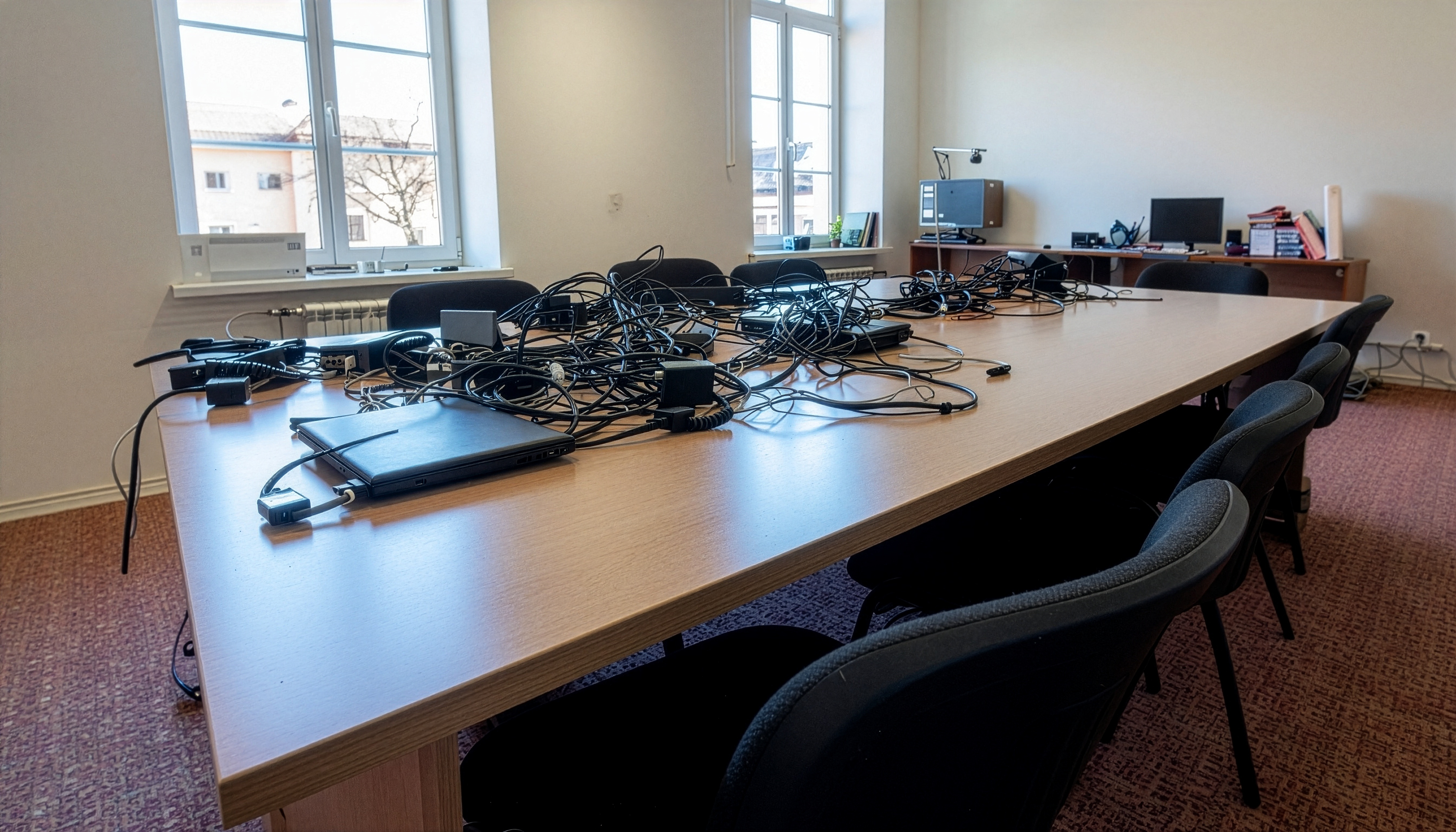
The most common failure happens in the first minute: someone can’t find the right cable, the cable is too short, the table is cluttered with leftover cords, or the connection point isn’t obvious. Even if the room eventually works, the room feels unreliable, and that perception sticks, people stop trusting the space.
A big reason for that is many conference rooms are designed around the technology, not around the user. The room assumes people know what to plug in, where to plug in, and how to do it quickly. In reality, people bring different devices, sit in different places, and expect the room to just work without instructions.
That’s where the conference table becomes the pressure point. Loose HDMI and USB-C cables get tangled, pulled, damaged, or disappear altogether. The result is a messy tabletop and a frustrating user experience. And when the table fails, the entire Microsoft Teams Rooms experience gets blamed, even if everything is working perfectly. One of the simplest ways to restore confidence is to make connectivity obvious, available, and controlled.
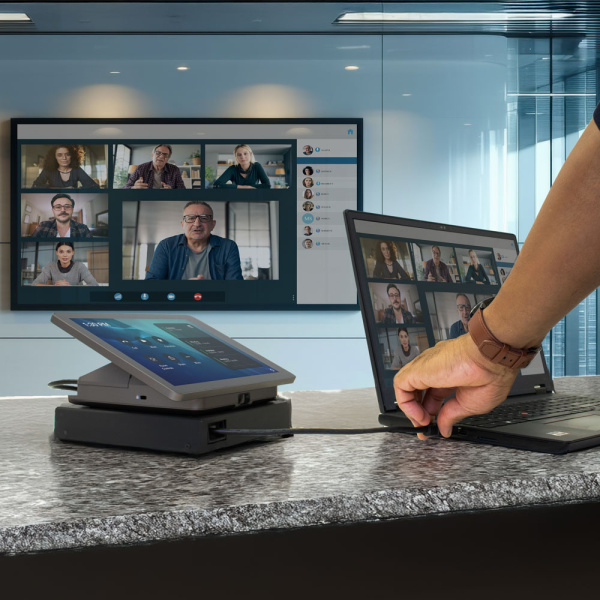
FSR’s Cable Pilot retractors are designed to provide clutter-free connectivity for Microsoft Teams Rooms and other collaboration spaces. The retractors feature a compact, low-profile design that integrates cleanly into modern conference furniture and keeps the tabletop looking organized and professional. Each unit provides retractable HDMI or USB-C connectivity, storing up to six feet of cable inside the housing for quick deployment when needed and smooth retraction when not in use. The system is designed to connect directly to touch controllers and other AV hardware, making it easy for users to plug in without hunting for loose cables or adapters.
The result is a simple, intuitive workflow. When a user needs a connection, they pull the cable, connect, and get back to the meeting. When they’re done, the cable retracts smoothly back into the unit, helping maintain a clean, consistent room experience meeting after meeting. It’s a small change, but it addresses the biggest reason rooms fail, the meeting experience should not depend on hunting for cables or guessing how the room is set up. When the connection point is always present and the table stays clean, meetings start faster, interruptions drop, and the room feels like a tool people can trust. In modern collaboration spaces, the best technology is often the technology you barely notice.