
Smart buildings have moved from futuristic concepts to everyday reality. From commercial offices and universities to healthcare facilities and government centers, buildings are becoming more connected, intelligent, and responsive. At the heart of this transformation lies one crucial element: a strong AV infrastructure.
While building automation systems control lighting, HVAC, and security, it’s the audiovisual backbone that ties these systems together and allows them to communicate, sense, and respond to human activity. Modern AV infrastructure enables interaction, automation, and adaptability throughout an entire facility.
Connecting Technology and Architecture
The convergence of AV systems with building automation and IoT sensors is redefining how spaces operate. Today, a single network may support video conferencing, digital signage, lighting, environmental controls, and occupancy monitoring, all sharing real time data.
In this connected ecosystem, the role of AV infrastructure is to serve as the nervous system, transmitting power and information between devices seamlessly. Smart sensors detect motion or ambient light levels, prompting systems to adjust accordingly. A meeting room might automatically dim lights and lower blinds when a presentation begins, while the audio system balances sound based on occupancy levels. In a lobby, digital signage can respond dynamically to crowd flow, changing content or wayfinding displays to manage movement and engagement. These interactions feel effortless to the user, but they depend on a precisely designed infrastructure, one that can carry data quickly, efficiently, and reliably to the right endpoints.
Use Cases that Bring Spaces to Life

Imagine a conference room that recognizes when participants enter and activates lighting, video displays, and audio equipment automatically. The space senses the number of occupants, adjusts temperature and lighting for comfort, and synchronizes with the organization’s scheduling system to prepare the correct layout.
In a university setting, a lecture hall might detect whether a class is streaming remotely and automatically optimize microphone sensitivity and camera framing. In a corporate environment, lobby signage can monitor foot traffic and alter content based on the number of visitors or time of day, ensuring messaging remains relevant and engaging.
Each of these scenarios illustrates how AV systems now interact with the broader fabric of a smart building, a process made possible only by reliable connectivity, intelligent cabling design, and scalable infrastructure.
The Infrastructure Challenges Behind the Innovation
While the promise of smart buildings is compelling, it requires solving several infrastructure challenges. Bandwidth demands are growing exponentially as more devices share the same network, transmitting high-resolution video, control data, and environmental feedback in real time. Cabling systems must accommodate both high power delivery and high speed data transmission, often across long distances and within complex architectural constraints. Latency can also weaken the user experience. Even a small delay in video, lighting, or control responses can disrupt the perception of a smart environment.
To overcome these challenges, infrastructure must be designed with flexibility, scalability, and future growth in mind. That’s where companies like FSR have continued to innovate, ensuring that the invisible layer of technology beneath every space performs as intelligently as the systems it supports.
How FSR’s Solutions Enable the Smart Building Revolution
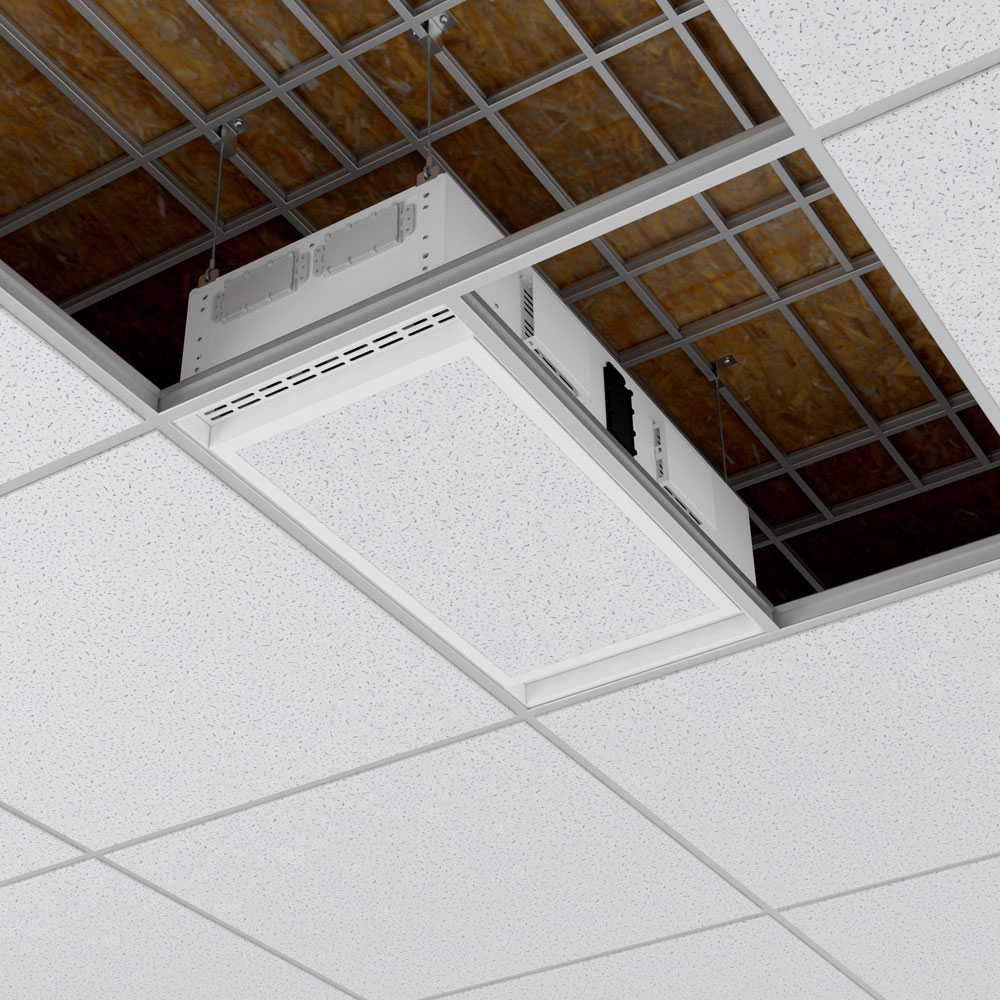
As smart buildings evolve, the integration of lighting, sensors, and networked devices demands infrastructure that is not only powerful but also adaptable and secure. FSR’s Ceiling Enclosure for PoE Lighting Nodes provides a simple yet critical solution for managing this growing complexity. This innovative ceiling box is designed specifically to house Power over Ethernet (PoE) nodes, which are essential components in modern lighting and IoT systems. By providing a safe, accessible, and concealed mounting point above the ceiling, the enclosure ensures that PoE nodes remain protected, organized, and easy to service.
The enclosure supports today’s trend toward PoE-powered lighting, where both power and data are delivered over a single Ethernet cable. This approach simplifies installation, reduces energy consumption, and enables intelligent control of lighting based on occupancy, daylight levels, or building schedules. FSR’s design ensures that these nodes can be deployed flexibly within the ceiling grid, keeping technology hidden yet fully functional.
Built for contractors, facility managers, and integrators alike, FSR’s Ceiling Enclosure for PoE Lighting Nodes enhances reliability and compliance while maintaining a clean architectural aesthetic. It reflects FSR’s ongoing commitment to making the invisible infrastructure of smart buildings smarter, safer, and ready for the next generation of connected environments.
Building the Future, One Connection at a Time
The evolution of smart buildings represents the next great leap in how people experience spaces. Behind every responsive light, automated meeting room, and adaptive digital display lies a complex network of cabling, raceways, and connection points working quietly to make intelligence visible.
As technology continues to advance, AV infrastructure will remain the defining link between architectural vision and functional reality. FSR’s ongoing commitment to innovation ensures that this invisible infrastructure continues to empower the smart buildings of today and the future.