
Ed Tech Blog

There are “mind-game” exercises you can do that allegedly help with memory. Similarly, there are innumerable articles about vitamins, minerals, supplements and herbs that claim to enhance memory “vitality.” But one thing is certain when it comes to memory- as you age, your brain becomes less flexible and the world around you becomes more distracting. Short-term memory recollection is compromised and focus is more difficult.
According to the National Center for Education Statistics, “In 2015, there were 11.8 million college and university students under age 25 and 8.1 million students 25 years old and over.” Also of note, the fastest growing cohort in US colleges and universities is the non-traditional student, which includes students 25 years and older. Students 25 years and older may face obstacles to learning and educational success in colleges and universities that traditionally cater to the traditional student population. We’ve written, prior, about non-traditional student enrollment being an opportunity for growth for colleges and universities with declining enrollment. But these opportunities come with the challenge of retaining this population of students who may not retain information the same as a traditional student.
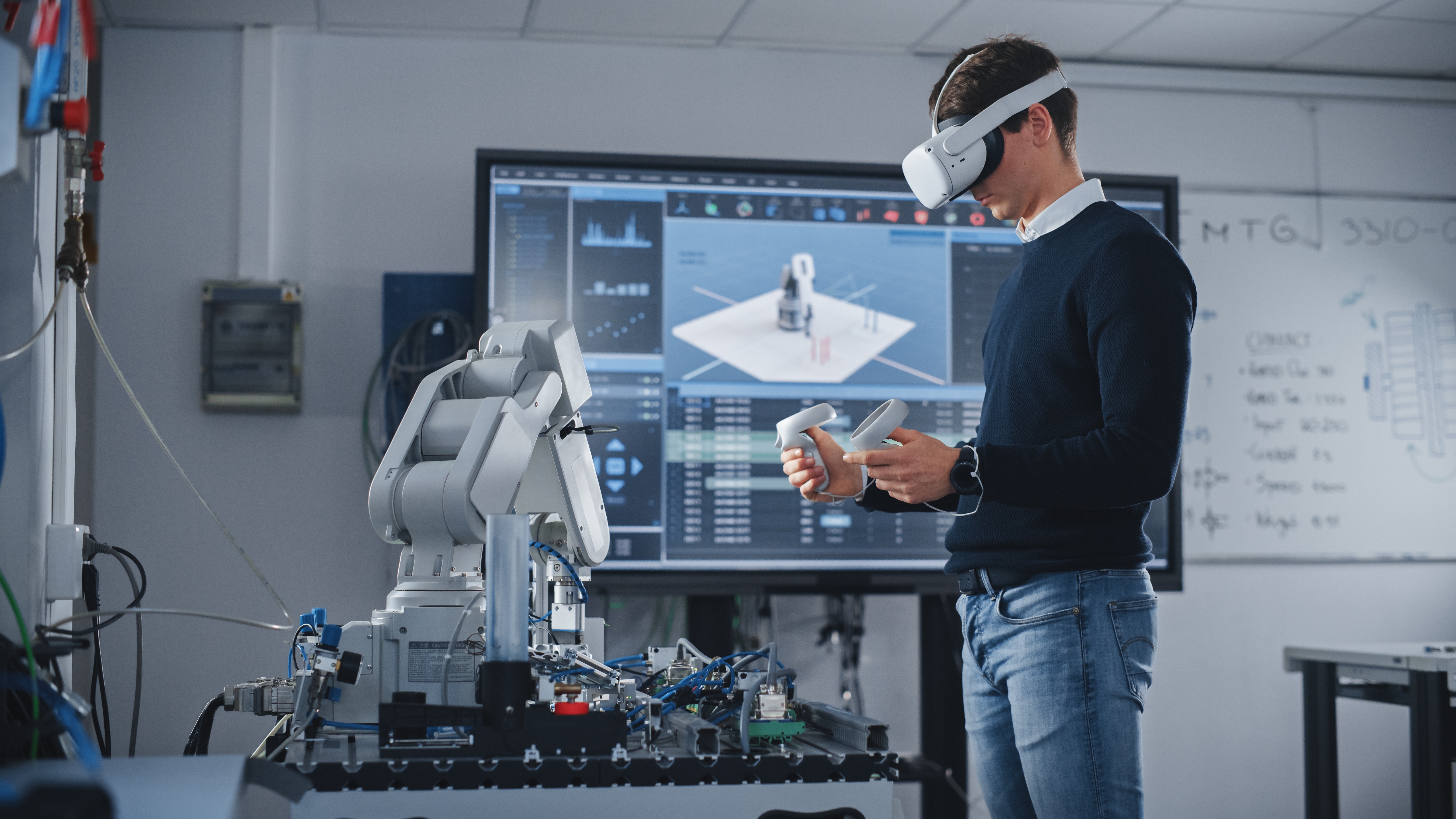
How does this affect educational technologists? Individuals of all ages seem to remember items, interactions or concepts that are most impactful (both positively and negatively) to them. Technology rich learning environments can create impact. You’ve heard it before- it’s important to know your audience when designing, well, anything. The same is true for audiovisual systems- the great thing about our technology is that it can be equally impactful for a variety of groups. I recently read an article that referenced a study from the University of Maryland regarding the influence of Virtual Reality on retention. The article, titled “Study: People Remember Information Better Through VR”, is pretty self-explanatory. But it only addresses...
Read more: Education Technology For Impact, Engagement, Memory

This is a guest post provided by Nanda Krish from Wisewire. I found the information to be relevant and in line with the value of content we like to provide on our Collaborate! blog. Please note: FSR doesn't endorse (or not endorse) Wisewire, as we have not evaluated their services. But we thank them for sharing this information with our readers! Enjoy:
You have a unique challenge ahead of you. You know valuable learning tools are emerging and your institution needs to keep up with educational trends. But working within a budget, juggling your day-to-day tasks, and trying to have meaningful conversations with people short on time is not easy. How do you convince multiple education professionals to invest in adaptive learning tools and materials (available from numerous online sources, including Wisewire), which may be an unfamiliar approach to student learning?
What Matters?
Gaining support for any initiative in higher education will always be contingent on whether the idea is best for students. It’s important to completely understand the benefits of adaptive learning tools for individual students and be prepared to describe these benefits to key stakeholders. In addition to basic questions, leaders will have their own specific areas of...
Involving and engaging commuter students on campus is a priority for schools. Generally, commuter student retention is lower than students living on-campus or in college owned housing. This could be the result of a number of factors: commuter students not feeling connected to the school brand (house proud); lack of social connectedness; increased distractions/ responsibilities from non-academic sources; lack of amenities on school grounds created for their complex lifestyle, etc.
StateUniversity.com claims, “Because commuter students spend limited time on campus and limited time creating relationships with other students, faculty, and staff, they have fewer opportunities to engage in quality interactions with these individuals. Therefore they are less likely to make a strong commitment to the university or its programs and are more likely to drop out of school than residential students.”
Fortunately, technology offers a conduit to increased connectivity. While technology alone will not be a campus cure-all for commuter retention, it can help support engagement, encourage group interactivity and provide conveniences to keep commuters on campus longer.
- Technology Rich Lounges- lounges located in central locations are good for commuter students who need a place to park in between classes. Dedicated areas with student- accessible TV’s can promote student interaction.
Read more: How Can Technology Help Engage The Commuter Student?

At the Midwest College and University AV Summit, we were able to tour one of the most technology rich 2-year colleges I have seen- Saint Paul College. While the technology in the classrooms was impressive, it was the technology in the technical areas of the college that were truly exciting. In general, 2 year colleges are under-funded and are, therefore, stuck in a cycle where the budget only allows for minimal upgrades over time. Larger technology investments are typically put on hold, indefinitely.
Saint Paul College is different. Consistently ranked in the top 10 technical and community colleges in the US, they have found a way to stand out. We toured high-technology sim labs for their nursing and medical sciences programs with observation rooms and lecture capture equipment tailored to help students and faculty review the information they need, effectively and efficiently. We tried out divisible flex-rooms with installed wireless presentation products for content sharing.
VR Technology for Skilled Trades
But, one of the unique spaces that made an impression on me was the welding shop. Located in the basement, they teach four or five (or more) different welding techniques in this large and well-outfitted area. Available to students...

There has been some discussion recently about recommending AV consultants. It’s an especially tough type of recommendation because all projects’ scope, firm specialties and overall bandwidth are different and can change in weeks and sometimes days depending on multiple variables. Ultimately what you should be looking for is an overall stable firm with a good reputation and a specialty team, if needed for your project (acoustics for theaters and music halls, large venue focus for arenas, etc). It also helps if the consultant has a local office or at least a clause in the contract that they will be available and on campus when needed.
Most institutions have a process for hiring a technology consultant including a thorough and multi-stage interview process, a portfolio review of prior projects of similar size and scope, and a cost analysis. But what happens when you come away from the process with what you think is a winning firm, until things start going sideways. What are the signs that signal red flags for your consultant-client relationship?
- They start questioning or changing your established standards, without discussion.- Some experts (as you hope most consultants are) often think they are helping you by changing out...
Read more: Three Signs It May Be Time To Look For Another AV Consultant
While attending the LearningScapes annual conference this year I was particularly interested in a small break-out session that highlighted junior high school student teams from across the country as they presented their own perception of the “Schools of the Future.” Each of the three diverse teams I sat in on had one common theme; they recognized need to bring nature into the learning environment for hands on and “real-life” experiences that offer the opportunity to engage in learning practically rather than theoretically. Some teams went so far as building parks, rivers and lakes INSIDE their school buildings to learn about ecosystems and interconnectedness. Can you make the entire learning environment an effective ecosystem?
The educational (and health) reasons and benefits for bringing the outdoors inside are numerous and well documented. Here is an article from Private University Products and News that gives you a good summary of the positives. However, there are inherent challenges when trying to design buildings that incorporate nature both inside and out. How, then, as technologists, do we complement and supplement natural and hands on learning while overcoming these obstacles?
- Natural/ Ambient Light vs. displays- Natural light is like the arch-nemesis of most projectors and...
Read more: What Students Want: Experiential Learning with Nature INSIDE the Classroom