
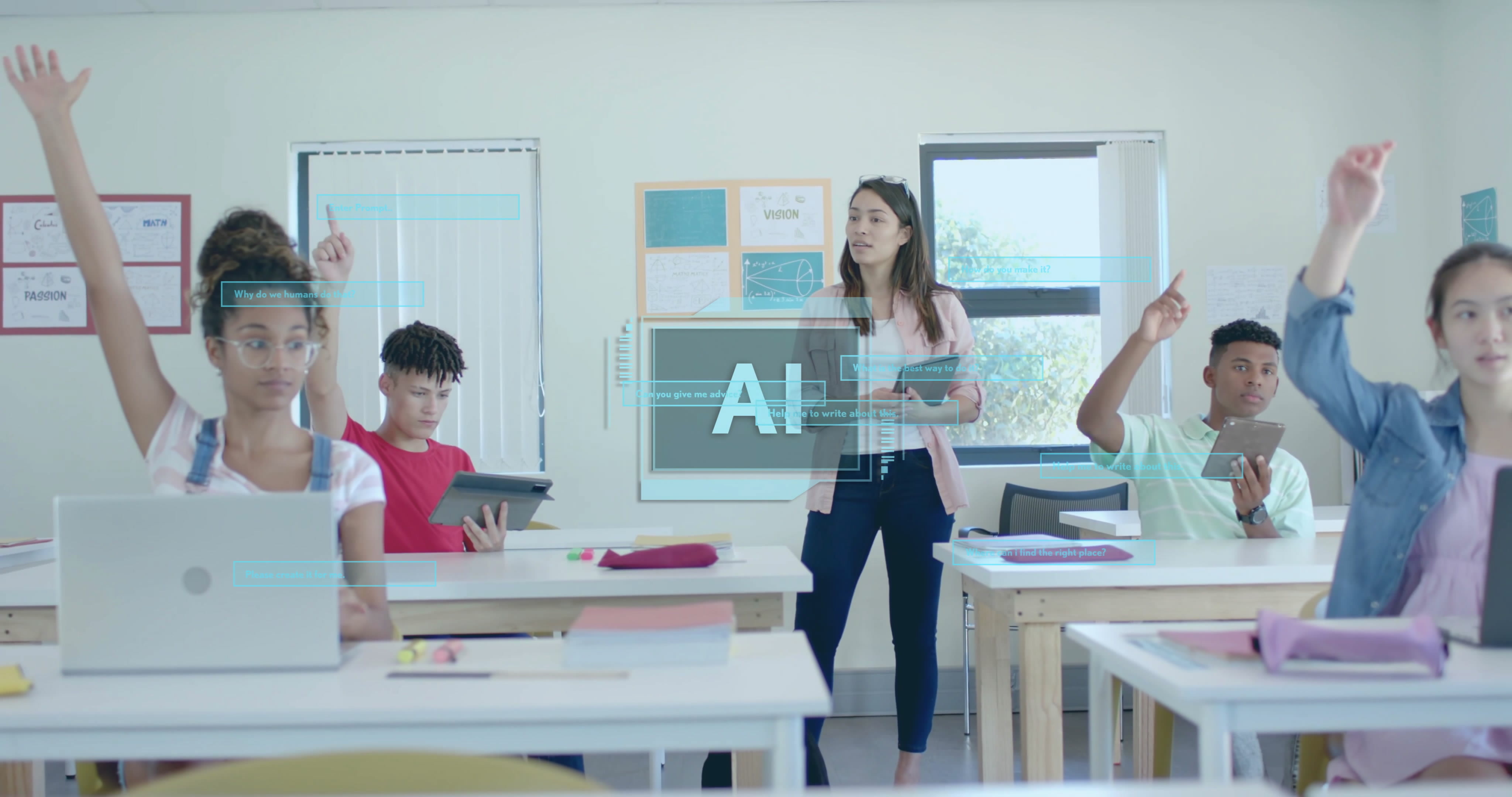
Inclusive education is not simply a principle of fairness but a practical commitment to ensuring that every learner, regardless of ability, language background, or learning difference, can participate meaningfully in the classroom. For decades, assistive technologies such as screen readers, hearing aids, magnification tools, and speech-to-text software have supported students with diverse needs. Today, the emergence of artificial intelligence has begun to transform these tools from static supports into adaptive learning partners. When artificial intelligence works in tandem with established assistive technologies, it creates opportunities for deeper inclusion, personalized support, and more equitable learning environments in K–12 schools.
Understanding Assistive Technology in Education
Assistive technology refers to tools and systems that help students overcome barriers to learning. These tools range from low-tech supports such as graphic organizers and pencil grips to high-tech solutions like screen readers and communication devices. Historically, assistive technology has focused on providing access. It has enabled students with visual, auditory, motor, or cognitive challenges to participate in learning activities that might otherwise be difficult.
However, traditional assistive tools often require manual adjustment, constant monitoring, or specialized training to use effectively. They provide essential support but do not adapt automatically to the changing needs of the learner. This is where artificial intelligence introduces a powerful enhancement. By adding intelligent systems that can analyze patterns, predict needs, and personalize responses, assistive technology becomes dynamic rather than static.
The Role of Artificial Intelligence in Inclusive Learning
Artificial intelligence enhances assistive technology by enabling tools to learn from student behavior and adapt accordingly. AI systems can recognize speech patterns, interpret text, identify visual elements, and analyze learning progress. These capabilities allow assistive tools to offer more than access. They offer meaningful engagement.
For example, AI-powered speech recognition can transcribe classroom discussions in real time, helping students with hearing impairments follow lessons more effectively. Text-to-speech systems enhanced with natural language processing can read aloud complex materials with appropriate tone and pacing, aiding students with reading difficulties. Visual recognition tools can describe images and diagrams to students with visual impairments, allowing them to participate fully in visual learning tasks.
Artificial intelligence also supports students who may not have formally identified disabilities but still face learning challenges. English language learners, students with attention difficulties, and those who struggle with organization or memory can all benefit from AI-driven supports that simplify information and provide guidance.
Personalization as a Pathway to Inclusion
One of the most significant contributions of artificial intelligence to assistive technology is personalization. Traditional classroom instruction often moves at a single pace and follows a standard format. AI-enabled tools can adjust reading levels, suggest alternative explanations, and provide prompts tailored to the learner’s pace and style.
An AI reading assistant, for instance, can detect when a student struggles with certain vocabulary and provide instant definitions or simplified explanations. Writing tools can suggest sentence structures, correct grammar, and guide students through the writing process without interrupting their flow of thought. These supports do not single out students but integrate naturally into classroom activities, reducing stigma while increasing confidence.
Personalization also empowers students to take ownership of their learning. They can choose how content is presented, whether through audio, visual, or text formats, making learning more accessible and engaging.
Supporting Teachers Through Intelligent Tools
Inclusion places significant demands on teachers, who must differentiate instruction for a wide range of learners. AI-assisted technologies help reduce this burden by automating some aspects of differentiation. Intelligent platforms can analyze student performance data and suggest instructional strategies, identify students who need additional support, and recommend resources aligned with individual needs.
For teachers, this means more time for meaningful interaction with students and less time spent on administrative tasks. AI tools can generate adapted worksheets, create alternative formats of lesson materials, and provide insights into student progress that might otherwise be difficult to track manually.
Importantly, these technologies do not replace professional judgment. They act as supportive partners that enhance the teacher’s ability to make informed decisions about instruction and support.
Breaking Language and Communication Barriers
Artificial intelligence plays a crucial role in bridging communication gaps in diverse classrooms. Real-time translation tools can help English language learners understand lessons while allowing them to participate in discussions. Speech-generating devices enhanced with AI can predict phrases and assist students with communication disorders in expressing themselves more easily.
These tools foster inclusion by ensuring that language is not a barrier to participation. Students can engage with peers and teachers more confidently, leading to improved social interaction and academic performance.
Enhancing Accessibility Beyond Disabilities
While assistive technology traditionally focuses on students with disabilities, AI-powered tools extend benefits to all learners. Features such as captioning, transcription, text simplification, and audio narration help students in various situations, including those who prefer different learning modalities.
This universal design approach reduces the distinction between students who need support and those who do not. Instead, it creates a classroom where accessibility features are part of everyday learning. This normalization strengthens inclusion and promotes empathy among students.
Ethical Considerations and Responsible Use
The integration of artificial intelligence into classrooms also requires careful consideration of ethics, privacy, and equity. Schools must ensure that student data is protected and that AI systems are used responsibly. Teachers and administrators need training to understand both the benefits and limitations of these tools.
It is also essential to ensure equitable access to technology. Inclusion cannot be achieved if only some students have access to AI-enhanced support. Thoughtful planning and policy development are necessary to ensure that these tools reach the students who need them most.
Building an Inclusive Culture Through Technology
Technology alone cannot create inclusion. It must be embedded within a culture that values diversity and equity. When AI assistive technologies are integrated thoughtfully, they reinforce inclusive practices by making participation easier and learning more adaptable.
Students begin to see diversity in learning styles as normal rather than exceptional. Teachers gain confidence in addressing varied needs. Classrooms become spaces where barriers are minimized and opportunities are expanded.
Conclusion
Artificial intelligence, when combined with established assistive technologies, represents a significant step forward in inclusive education. It transforms static tools into adaptive supports that respond to individual learner needs in real time. By personalizing instruction, supporting teachers, breaking communication barriers, and promoting universal accessibility, AI assistive technology has the potential to reshape K–12 environments into truly inclusive spaces.