
Education systems across the world are facing a fundamental challenge. While academic knowledge remains essential, students are increasingly expected to graduate with skills that prepare them for complex, unpredictable, and collaborative environments. Employers, higher education institutions, and communities alike emphasize the need for learners who can think critically, communicate effectively, work well with others, and adapt to new situations. Problem-based learning has emerged as a powerful instructional approach that directly addresses these expectations by placing meaningful problems at the center of the learning experience.
Understanding Problem-Based Learning
Problem-based learning is an instructional approach in which learning begins with a problem rather than a lecture or textbook chapter. Students are presented with a complex situation that does not have a single correct answer. They must determine what they already know, identify what they need to learn, and work collaboratively to develop possible solutions. The teacher’s role shifts from primary source of information to facilitator, guiding inquiry, supporting reflection, and ensuring alignment with learning goals.
This approach mirrors how learning often occurs outside of school. In professional and civic contexts, individuals are rarely given clear instructions or predefined answers. Instead, they must assess information, seek resources, communicate with others, and make informed decisions. Problem-based learning prepares students for these realities by embedding academic content within authentic problem-solving contexts.
The Connection Between Problem-Based Learning and Future-Ready Skills
Future-ready skills are those that enable learners to navigate complexity, uncertainty, and change. While definitions vary, most frameworks emphasize collaboration, critical thinking, communication, creativity, and self-direction. Problem-based learning naturally integrates these competencies into daily classroom practice because students must use them to engage successfully with the problems they are exploring.
When students work through well-designed problems, they are required to think deeply, explain their reasoning, listen to diverse perspectives, and revise their ideas based on evidence. These processes foster skill development in ways that traditional instructional models often struggle to achieve. Rather than teaching skills in isolation, problem-based learning embeds them within meaningful academic work.
Building Collaboration Through Shared Inquiry
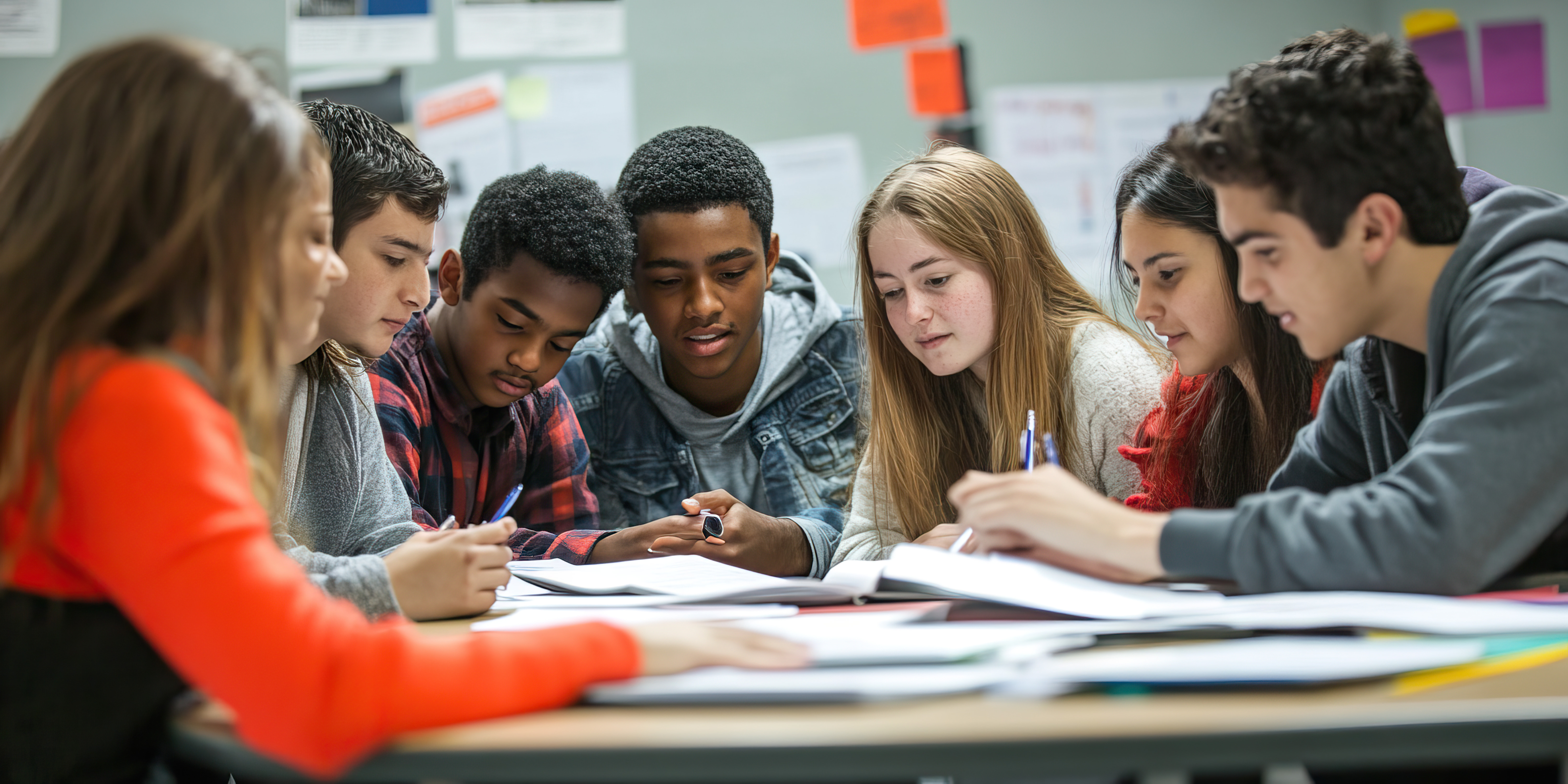
Collaboration is a central feature of problem-based learning. Students typically work in small groups where each member contributes ideas, asks questions, and takes responsibility for part of the learning process. Successful collaboration requires more than simply dividing tasks. Students must learn to listen actively, negotiate roles, resolve disagreements, and build on one another’s thinking.
In a problem-based environment, collaboration becomes purposeful rather than performative. Students understand that they need one another’s insights to move forward. As they encounter obstacles, they learn to rely on collective problem-solving rather than individual effort alone. Over time, this experience helps students develop interpersonal skills that are essential in modern workplaces and communities.
Teachers play a critical role in shaping collaborative experiences. By establishing clear expectations, modeling respectful discourse, and prompting reflection on group dynamics, educators help students move beyond surface-level cooperation toward genuine collaboration.
Strengthening Critical Thinking and Reasoning
Critical thinking lies at the heart of problem-based learning. Students are not asked to recall information or apply a single procedure. Instead, they must analyze situations, evaluate evidence, consider multiple perspectives, and justify their decisions. This type of thinking requires sustained effort and intellectual engagement.
Well-designed problems encourage students to ask meaningful questions. What information is relevant. What assumptions are being made. What evidence supports a particular conclusion. As students grapple with these questions, they develop habits of mind that extend beyond any single subject area.
Encouraging Self-Directed Learning
Problem-based learning places significant responsibility on students to guide their own learning. Rather than being told exactly what to study, students must identify gaps in their understanding and seek out relevant information. This process fosters self-direction, curiosity, and metacognitive awareness.
As students plan their research, monitor their progress, and evaluate their solutions, they develop skills that are essential for lifelong learning. They learn how to set goals, manage time, and reflect on their learning strategies. These habits are particularly important in a rapidly changing world where individuals must continuously acquire new knowledge and skills.
Teachers support self-directed learning by providing structure without removing autonomy. Clear learning objectives, guiding questions, and checkpoints help students stay focused while still allowing them to make meaningful choices about how they approach the problem.
Designing Effective Problem-Based Learning Experiences
The success of problem-based learning depends heavily on the quality of the problems themselves. Effective problems are open-ended, relevant, and aligned with curricular goals. They are complex enough to require sustained inquiry but accessible enough to allow all students to participate meaningfully.
Well-designed problems often connect to real-world issues or authentic scenarios. This relevance helps students see the value of what they are learning and increases motivation. Problems should also encourage multiple approaches and solutions, allowing students to explore ideas creatively and learn from one another.
Assessment in problem-based learning should reflect both content understanding and skill development. Formative feedback, reflection, and opportunities for revision are essential components of this process. When assessment focuses on growth and learning rather than solely on final answers, students are more willing to take intellectual risks.
Preparing Students for an Uncertain Future
One of the greatest strengths of problem-based learning is its ability to prepare students for an uncertain future. The challenges students will face as adults are unlikely to resemble textbook exercises with predetermined solutions. They will need to navigate ambiguity, collaborate across differences, and make informed decisions based on incomplete information.
Problem-based learning helps students develop the confidence and competence to face these challenges. By engaging with complex problems in a supportive educational environment, students learn that uncertainty is not something to avoid but something to explore thoughtfully.
As schools strive to equip students with future-ready skills, problem-based learning offers a practical and powerful approach. It bridges academic learning and real-world application, helping students develop the collaboration, critical thinking, and communication skills they need to succeed.
Conclusion
Problem-based learning represents a shift in how educators think about teaching and learning. By placing meaningful problems at the center of instruction, it transforms classrooms into spaces of inquiry, collaboration, and growth. Students are not simply learning about the world. They are learning how to engage with it thoughtfully and responsibly.
When implemented with intention and care, problem-based learning builds the future-ready skills that students need to thrive in an ever-changing landscape. It prepares learners not just to answer questions, but to ask them, explore them, and respond with insight and creativity. In doing so, it aligns education with the demands of the present and the possibilities of the future.